2026 tied 1905 for the latest first Atlantic hurricane since tracking began in 1851
Tropical Storm Isaias became a hurricane over the southern Gulf at 10:30 p.m. Central time on Oct. 7, which is 3:30 a.m. on Oct. 8 in the universal time forecasters use. Only three of the 175 previous Atlantic seasons went about that long or longer without one. The first hurricane of 1905 formed on Oct. 8, and 1907 and 1914 had none at all.
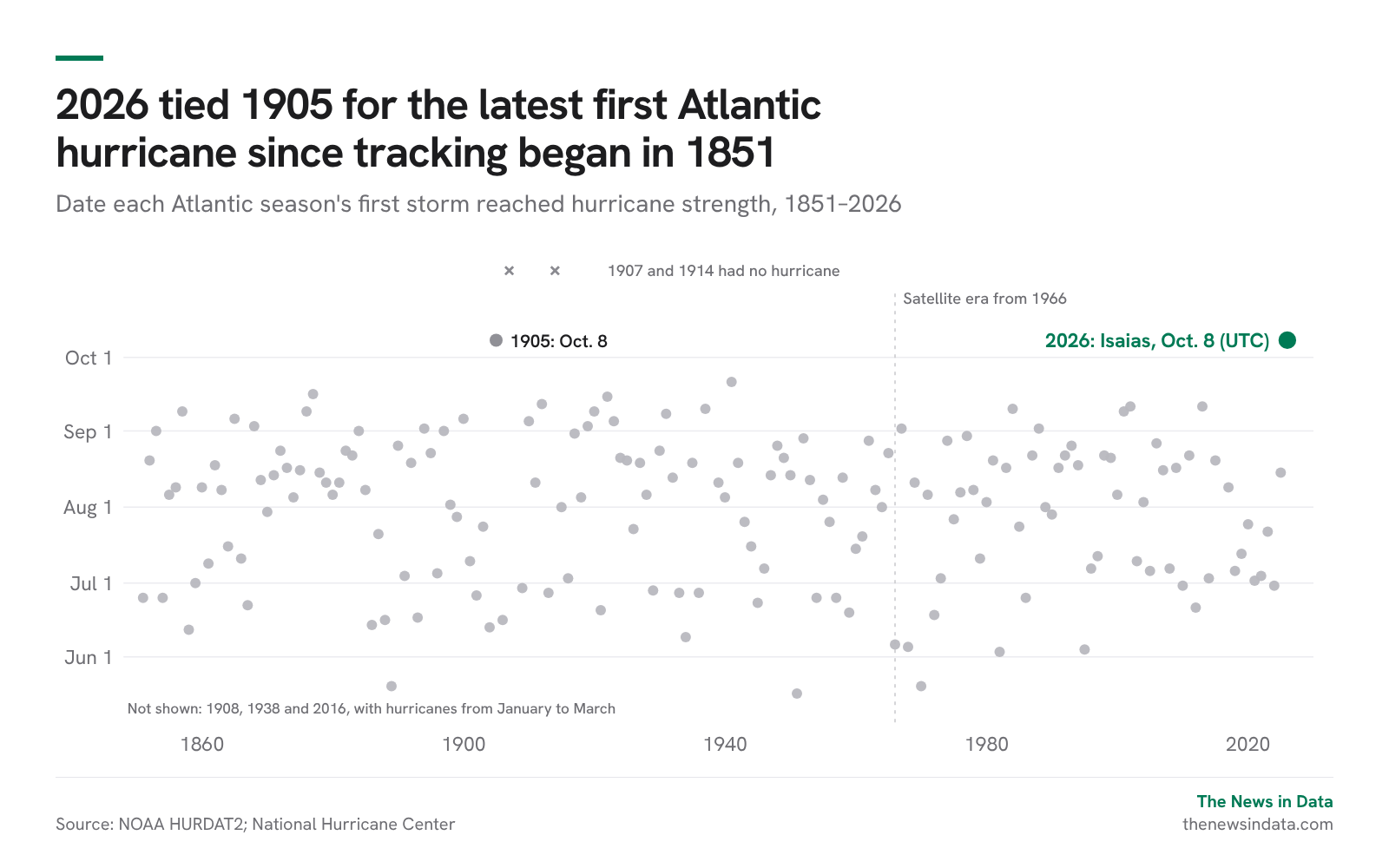
A typical season has its first hurricane in early August
The middle date across all seasons since 1851 is about Aug. 7. Last year Erin became the first hurricane on Aug. 15, and in 2024 Beryl did on June 30.
The satellite-era comparison is the solid one
Before weather satellites began covering the Atlantic in 1966, and before aircraft reconnaissance in the 1940s, storms far out at sea could go unmeasured, so 1905, 1907 and 1914 may have had hurricanes nobody recorded. Since 1966 the latest first hurricane had been Sept. 11, in both 2002 (Gustav) and 2013 (Humberto). This year beat that by almost four weeks.
El Niño doesn't fully explain it
El Niño warms the eastern Pacific and strengthens upper-level winds over the Caribbean and tropical Atlantic, which tear at developing storms, and this year's El Niño is strong, at +2.16°C on NOAA's index for July through September. But each of the six other satellite-era seasons with a comparable El Niño (1972, 1982, 1987, 1997, 2015 and 2023) had its first hurricane by Aug. 22. The data shows that El Niño alone doesn't account for a start this late, and it can't tell us what else held storms back.
What's next
The National Hurricane Center's final review after the season may shift Isaias's upgrade by a few hours, which will decide whether 2026 ties 1905 or comes in just after it. The season runs through Nov. 30, and if Isaias turns out to be the only hurricane, 2026 would have the fewest of the satellite era, below the two in 1982 and 2013.
How we counted: the first six-hourly best-track entry with hurricane status (winds of 74 mph or more) in NOAA's HURDAT2 database for 1851–2023, National Hurricane Center storm reports for 2024–25 and the operational upgrade time for 2026. Dates are in UTC on a 365-day calendar. El Niño values are NOAA's Oceanic Niño Index for August–October (July–September for 2026, the latest available).