Opioids Killed 44,564 Americans In 2025 While Cannabis Alone Killed Almost No One
Read the interactive version of this story →
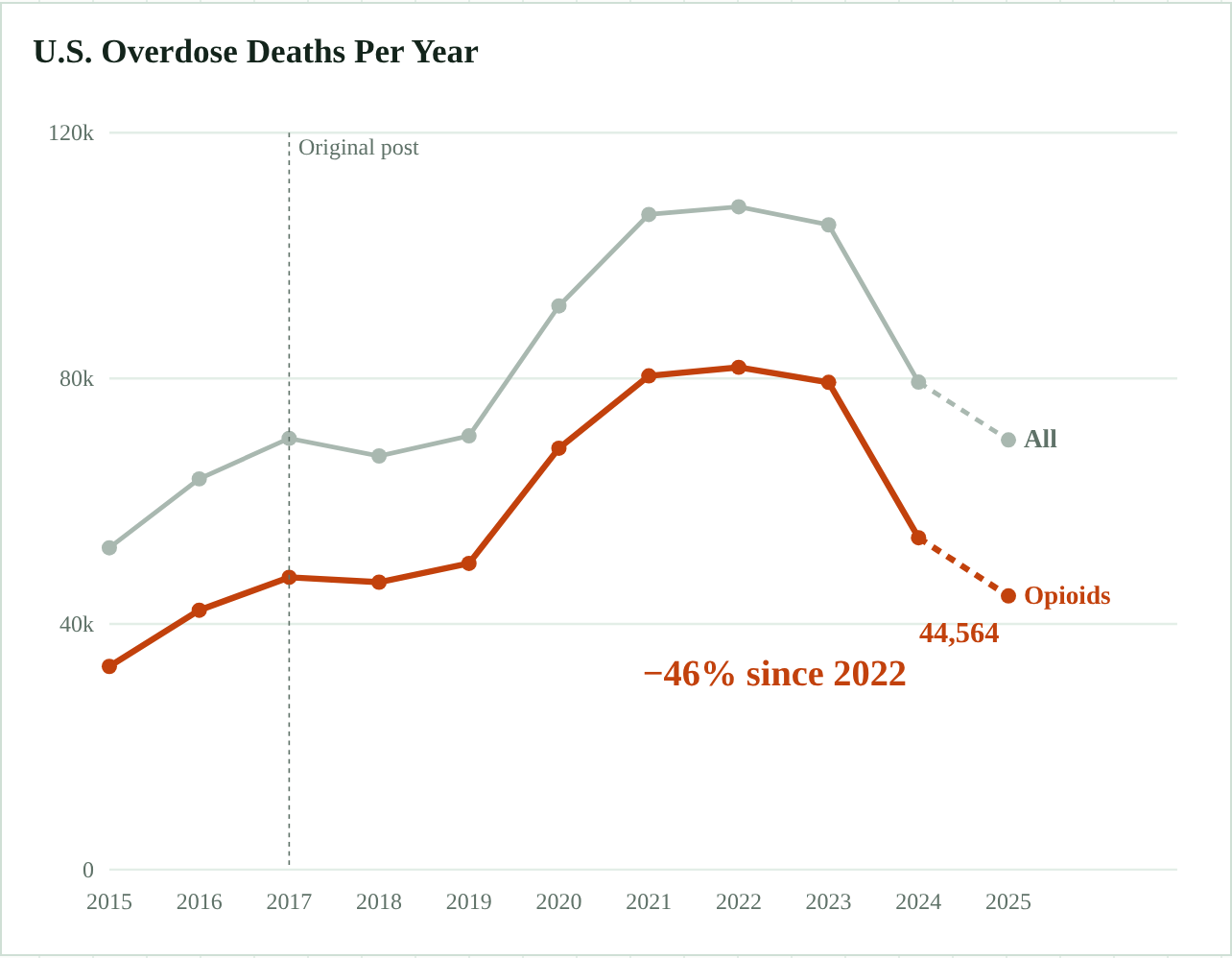
In 2017, I posted a chart to Reddit’s r/dataisbeautiful titled “Marijuana responsible for 0 overdose deaths while opioids killed more than 20,000 Americans.” It drew more than 48,000 upvotes. The opioid figure in that title turned out to be far too low, because CDC’s full count of opioid-involved deaths was 42,249 in 2016, about twice what the title claimed.
The toll kept climbing after the post as illicit fentanyl spread through the drug supply. Deaths involving synthetic opioids rose from 19,413 in 2016 to 73,838 in 2022, and opioid-involved deaths peaked that year at 81,806, nearly double the 2016 count. Total overdose deaths reached 107,941, the most ever recorded.
Deaths have fallen in each of the three years since, the longest decline in decades. CDC’s provisional count for 2025 is 69,973 overdose deaths, about the same as in 2019, and 44,564 of them involved opioids, which is 46 percent below the 2022 peak but still higher than the 2016 figure that prompted the original chart.
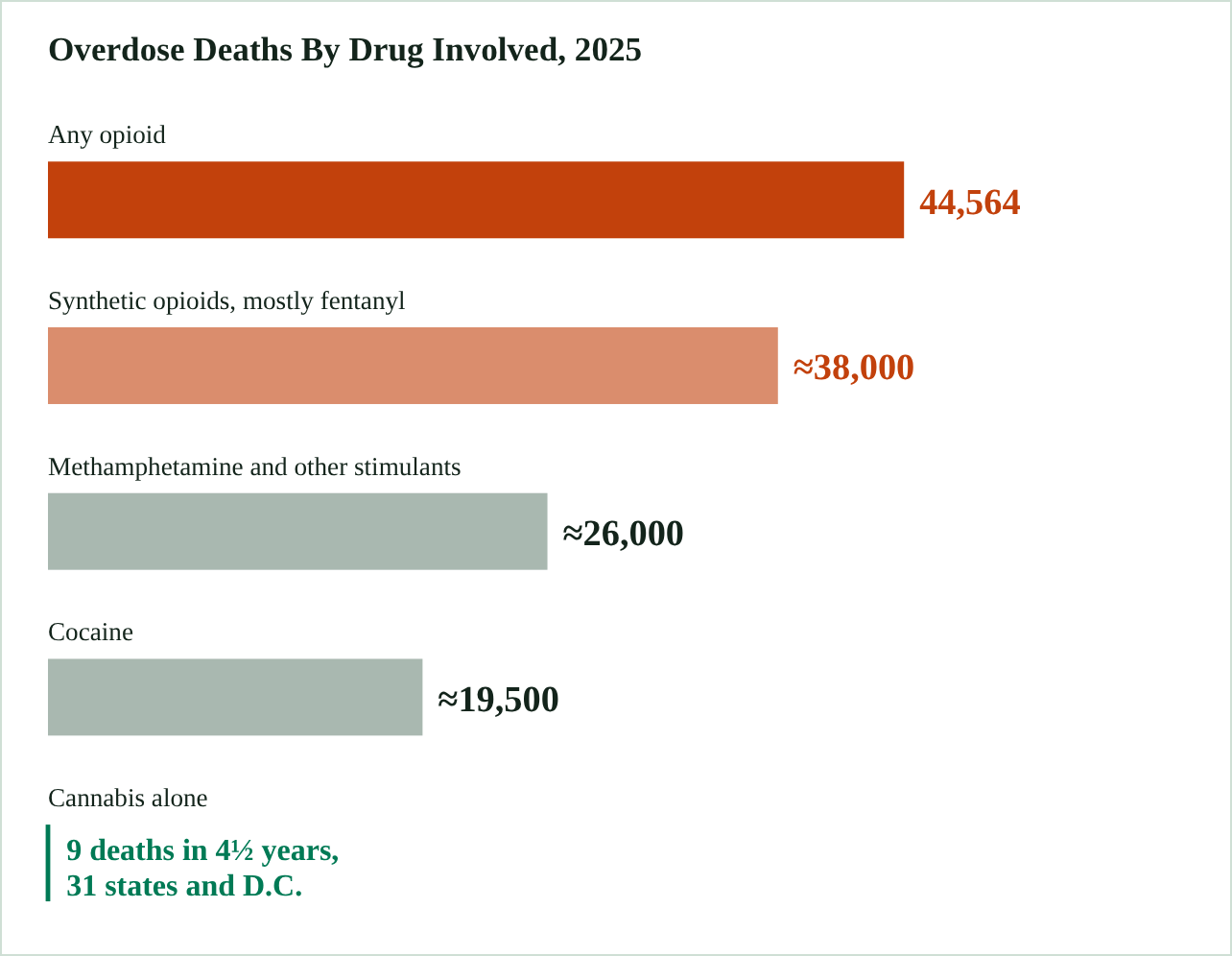
Opioids were involved in nearly two of every three overdose deaths in 2025, and fentanyl and similar synthetic opioids accounted for about 38,000 of them. Methamphetamine and cocaine each contributed to tens of thousands of deaths, often in combination with fentanyl, which is why the categories overlap and add up to more than the total.
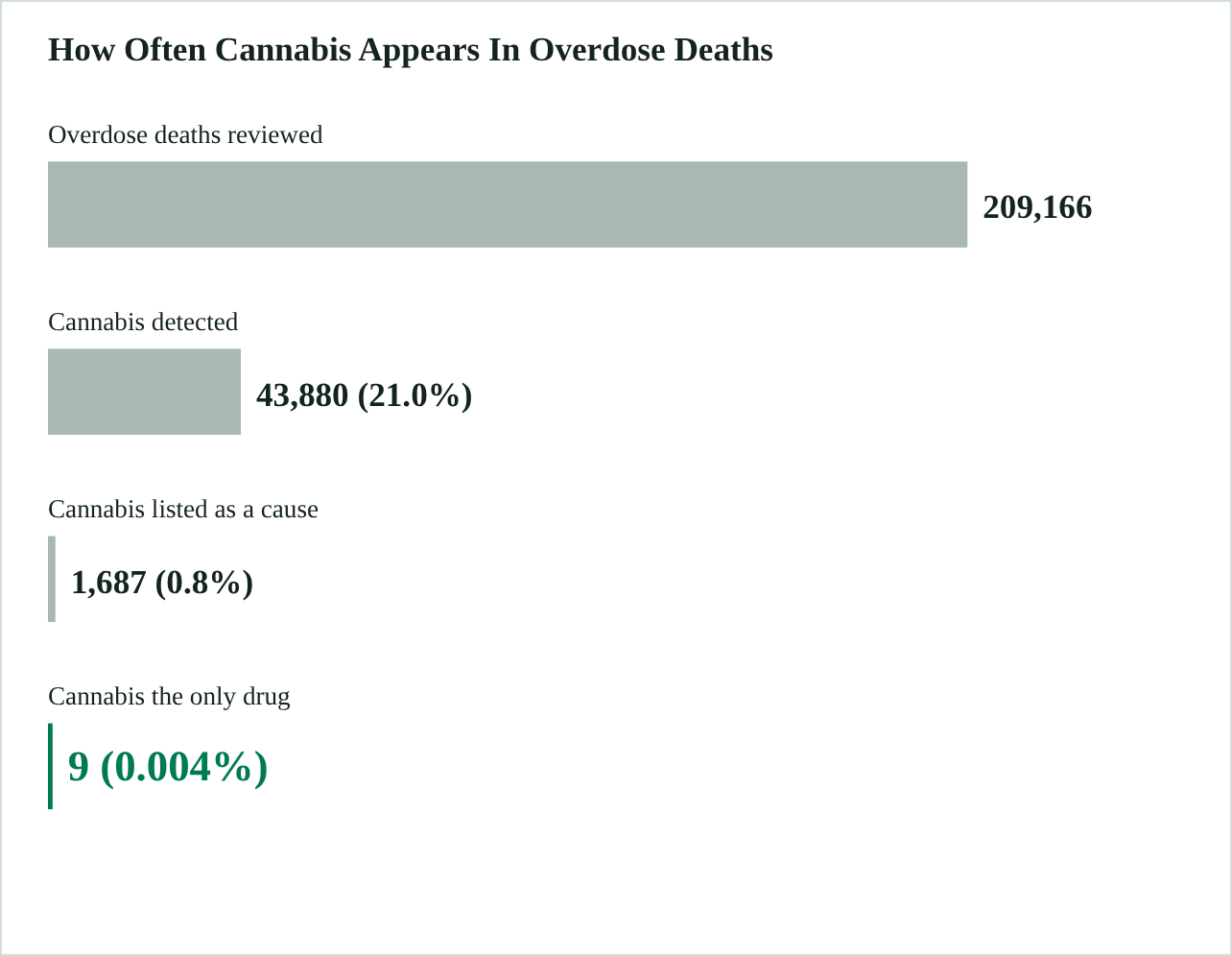
A CDC review published in September looked at 209,166 overdose deaths in 31 states and D.C. from 2021 to mid-2025. Cannabis was detected in about one in five of those deaths and was listed as a cause in 1,687, almost always alongside other drugs. It was the only drug present in 9, or 0.004 percent of the deaths reviewed.
What the cannabis numbers mean
The 2017 chart said zero, and the CDC’s new review shows the true figure is small but not zero. The review drew on the State Unintentional Drug Overdose Reporting System, which combines death certificates with medical examiner and toxicology reports, and it found that 73.5 percent of the deaths with cannabis detected also involved illicit fentanyl, while 60.4 percent involved stimulants. The authors conclude that finding cannabis in an overdose death mostly reflects the use of several drugs together rather than cannabis causing the death.
The review also raised a concern about young people. Cannabis was detected in 42.7 percent of overdose deaths among 12- to 17-year-olds, the highest share of any age group and more than twice the 16.7 percent among adults 50 and older. Because toxicology screens do not always test for cannabis, the authors say all of these shares are probably undercounts.
Why overdose deaths are falling
The 2025 total was about 14 percent below the 81,313 deaths CDC estimated for 2024, and deaths fell for opioids, cocaine and methamphetamine alike. Researchers point to wider access to naloxone, the overdose-reversal drug, along with expanded addiction treatment and changes in the illicit drug supply. The decline was uneven, though, as Arizona, Colorado and New Mexico each recorded increases of 10 percent or more compared with 2024.
The 2025 figures are provisional and will likely rise somewhat as medical examiners finish their investigations, which can take months. Even so, the gap between the two drugs in the original chart has held for nine years, and the opioid side of it is larger now than it was when the chart was posted.
How we counted: yearly totals for 2015 through 2022 come from NCHS Data Brief 491, 2023 and 2024 from NCHS Data Brief 549, and 2025 from CDC’s provisional counts released in May 2026. The 2025 figures for synthetic opioids, stimulants and cocaine are rounded, as reported by the Partnership to End Addiction. A death involving more than one drug is counted in each category. Cannabis figures come from CDC’s Morbidity and Mortality Weekly Report, Sept. 3, 2026, which covers Jan. 2021 to June 2025 in 31 states and D.C. and is not a national count. The original chart is here on Reddit. Download the data.
You may republish the charts in this story, with credit to The News in Data and a link to this story.