Four in 10 U.S. adults say they get health and wellness information from social media influencers or podcasts. Most of them have done something about it. In a Pew Research Center survey, 63% of that group said they had tried a fitness, diet or beauty routine because an influencer talked about it, and 55% said they had bought a health or wellness product.
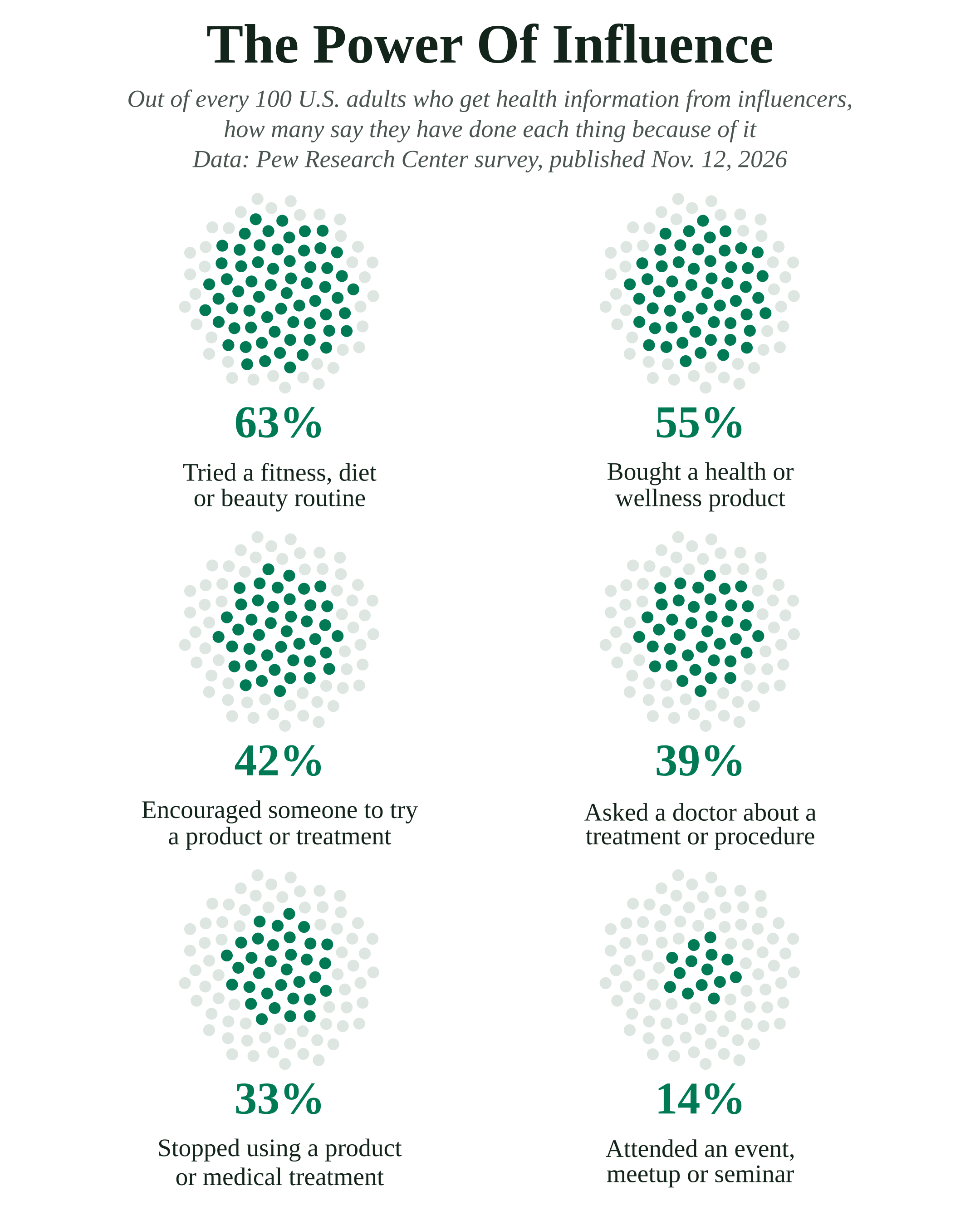
The influence reaches the doctor's office too. About four in 10 (39%) have asked a doctor about a treatment or procedure after hearing about it from an influencer, and a third (33%) have stopped using a product or medical treatment.
Use the tool below to see what followers did, and then how often the posts they see are a pitch: by topic, by who is posting and by what is being promoted.
Who acts on it
Among people who get health information from influencers, women are more likely than men to have tried a routine, bought a product or encouraged someone else to try one, Pew found. Black adults in this group are more likely than White adults to say they bought a product or encouraged others. About four in 10 overall (42%) have urged someone they know to try a product or treatment, and 14% have gone to an event, meetup or seminar.
More than a third of posts are a pitch
What are followers responding to? In a separate analysis published Nov. 12, Pew looked at 535,512 posts from 6,334 health and wellness influencers over three months this spring and found that 38% promoted a product or service.
The most common pitch is information. Workout programs, nutrition guides, apps and recipes appear in 36% of promotional posts, more than three times the share that promote supplements (11%).
Guides first, then products, then services
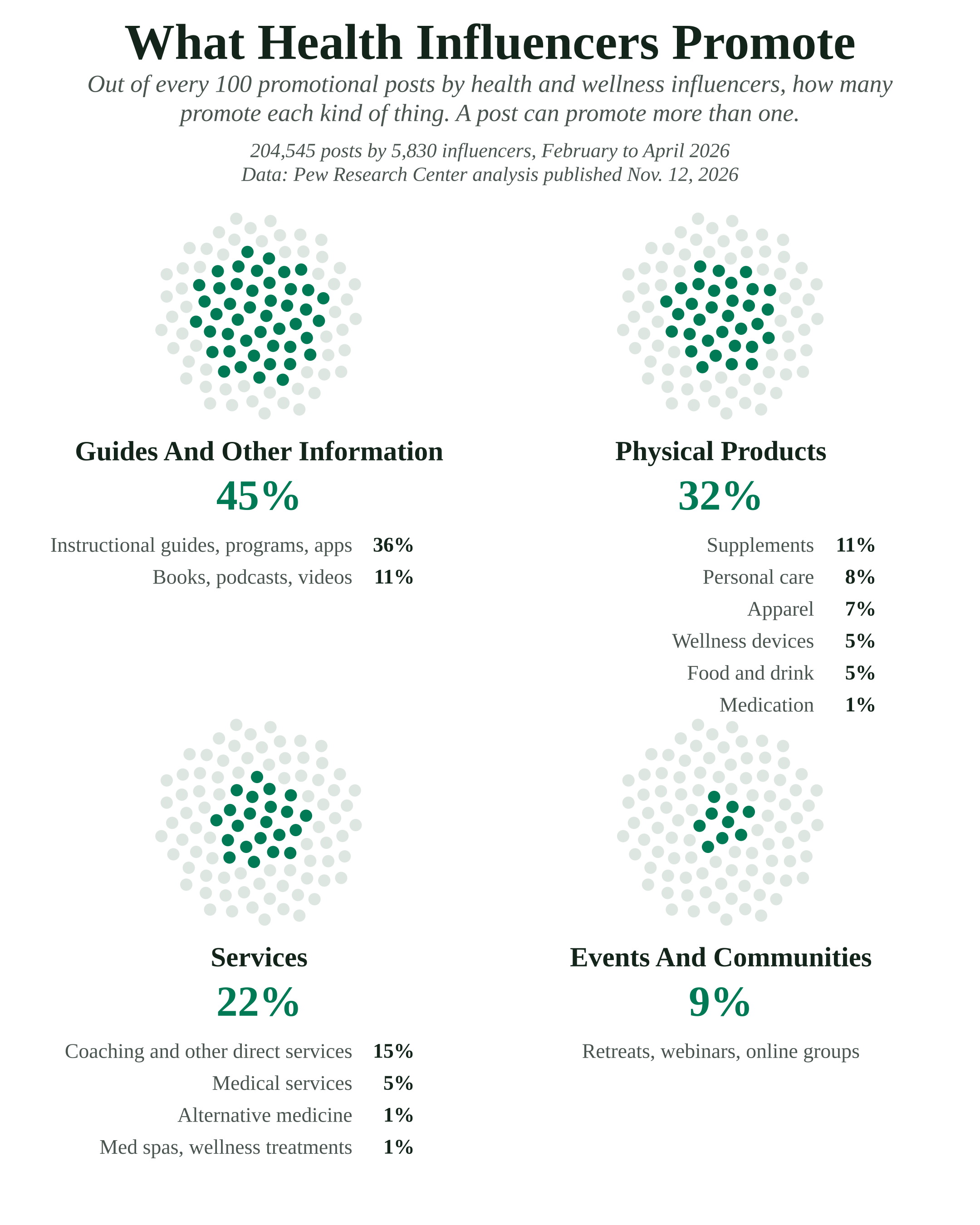
Pew sorted 204,545 promotional posts into four broad groups. A post can land in more than one, so the shares add to more than 100%.
Informational products lead at 45% of promotional posts. Most of that is instructional material (36%); books, podcasts, videos and similar content make up 11%. Many of these are free: 12% of promotional posts offer something at no cost, which Pew notes can be a way to capture future engagement.


Physical products appear in 32%. Supplements are the largest piece at 11%, followed by personal care products such as sunscreen (8%), apparel (7%), wellness devices such as gym equipment (5%) and food and drink (5%). Medication is 1%.
Services appear in 22%, and most of that (15%) is coaching, consulting or sessions the influencer provides directly. Medical services are 5%. Events and communities, such as retreats, webinars and online groups, appear in 9%.
The topic matters more than the person
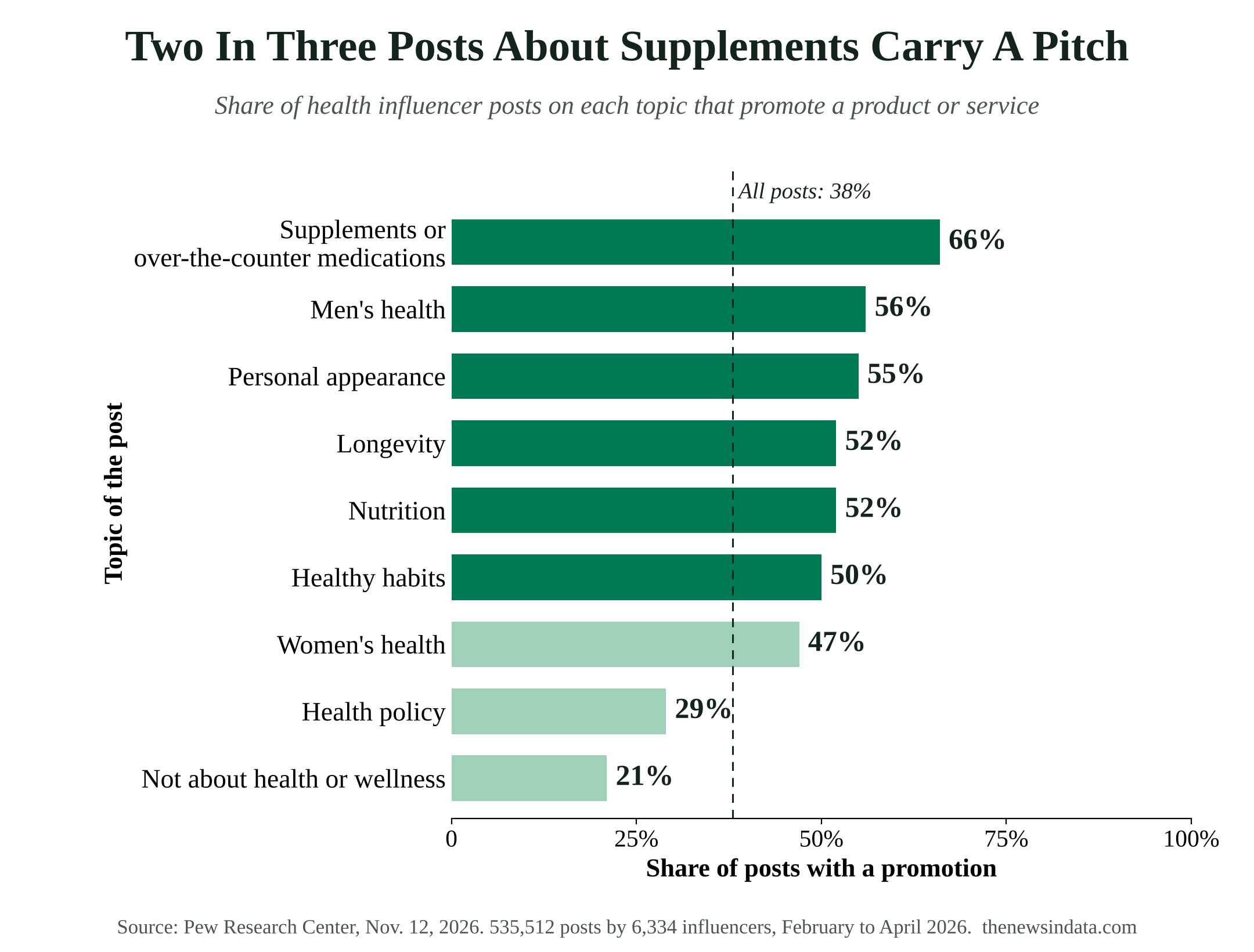
How often a post carries a pitch depends heavily on what it is about. Two-thirds of posts that mention supplements or over-the-counter medications (66%) include a promotion. So do half or more of posts about men's health (56%), personal appearance (55%), longevity (52%), nutrition (52%) and healthy habits (50%).
Posts about health policy are much less likely to promote anything (29%), and posts that aren't about health at all are the least likely (21%).
Credentials move the number less. Among influencers who are health professionals, dietitians and nutritionists promote something in 46% of posts and alternative and integrative health practitioners in 45%. Doctors, nurses and others in conventional medicine do so in 35%, and mental health professionals in 34%.
Who recommends supplements
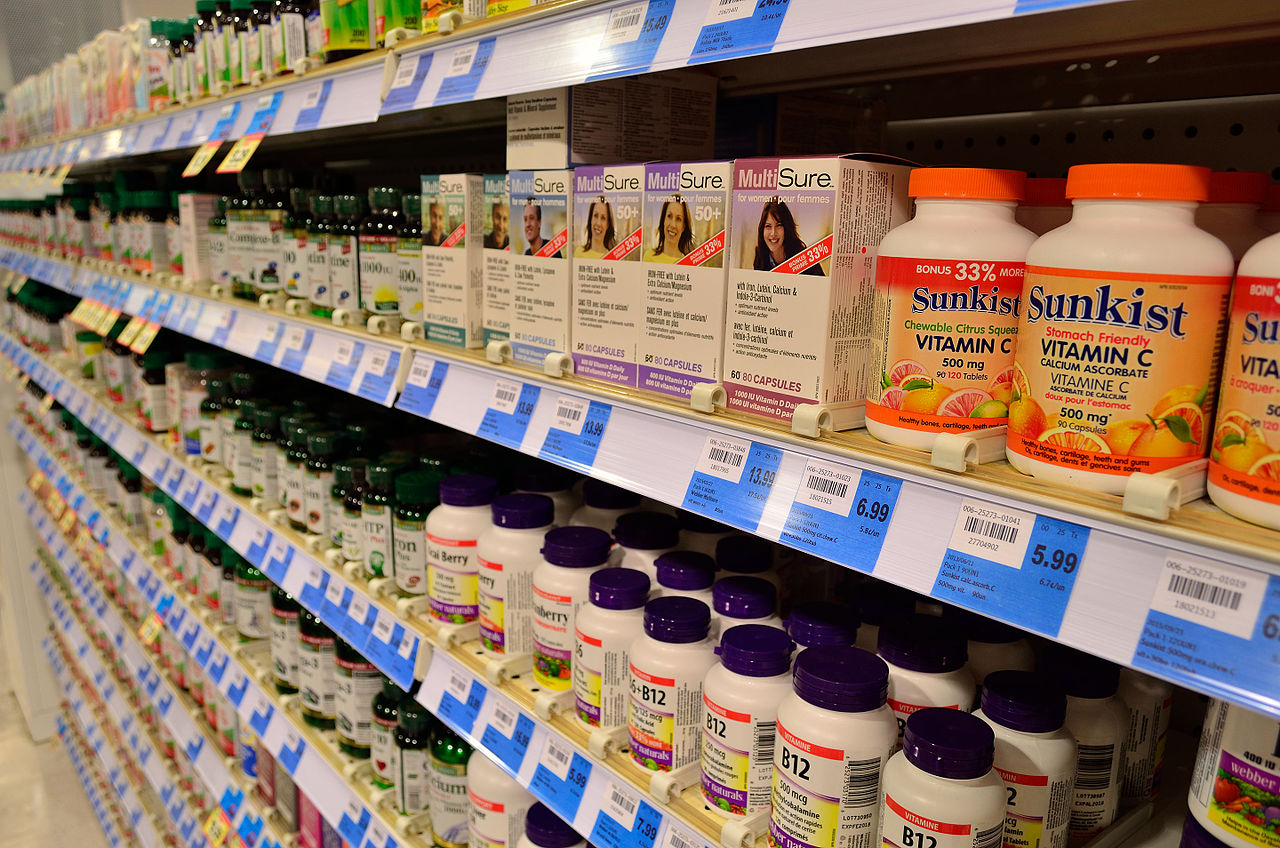
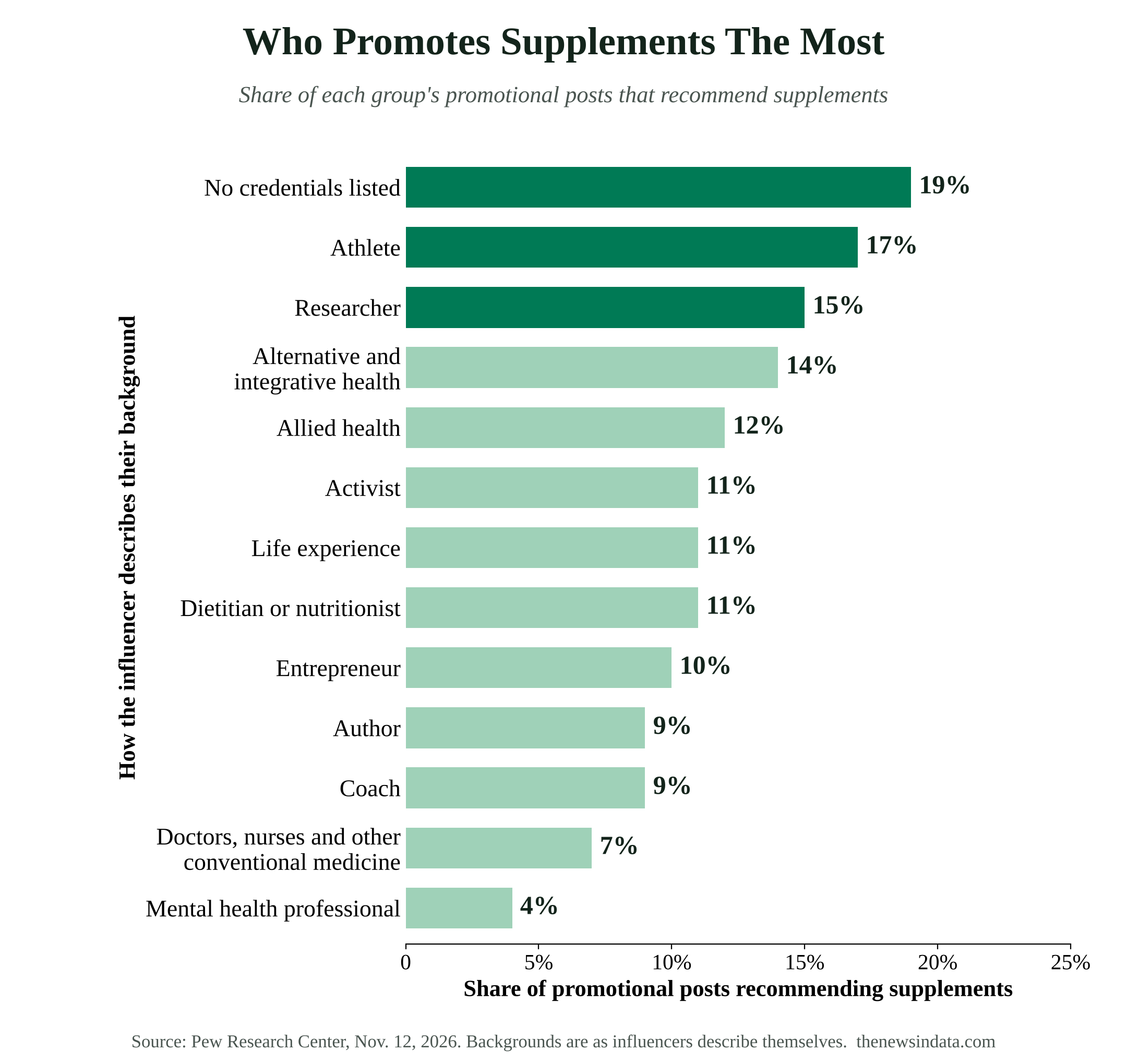
Supplements show up most in the promotional posts of influencers who list no credentials at all (19%) and of athletes (17%). They are least common from mental health professionals (4%) and from doctors, nurses and others in conventional medicine (7%). Alternative and integrative health practitioners recommend them at twice the conventional rate (14%).

A small group does much of the selling. Nearly all of the influencers Pew studied (92%) promoted something at least once, but the most active 10% of promoters produced 46% of all promotional posts. Two-thirds of that group's posts were promotions.
About a quarter of promotional posts involve a direct sponsorship or collaboration with a brand, and 6% carry a discount code or affiliate link. No single brand accounts for more than 1% of promotional posts. Seven of the 10 most-mentioned brands sell activewear.
What this doesn't show
Pew counted what was promoted, not whether the products work or whether the advice is sound, and a recommendation is not always a paid one: only about a quarter involved a brand deal. Pew identified promotional posts by the recommendation language in them, so the count depends on how that language was defined. The study covers three months, February to April 2026, and accounts Pew identified as health and wellness influencers; a different definition would give different numbers. The follower figures are what people report about themselves.
How we counted: All figures are from Pew Research Center, "'Download My Free Guide': What Products and Services Do Health and Wellness Influencers Promote?" by Regina Widjaya and Galen Stocking, Nov. 12, 2026. Shares of all posts are based on 535,512 posts by 6,334 influencers; shares of promotional posts are based on 204,545 posts by 5,830 influencers. Follower behavior is from a survey of U.S. adults conducted June 9-15, 2025, among the 40% who get health information from influencers. Download our data (CSV).